
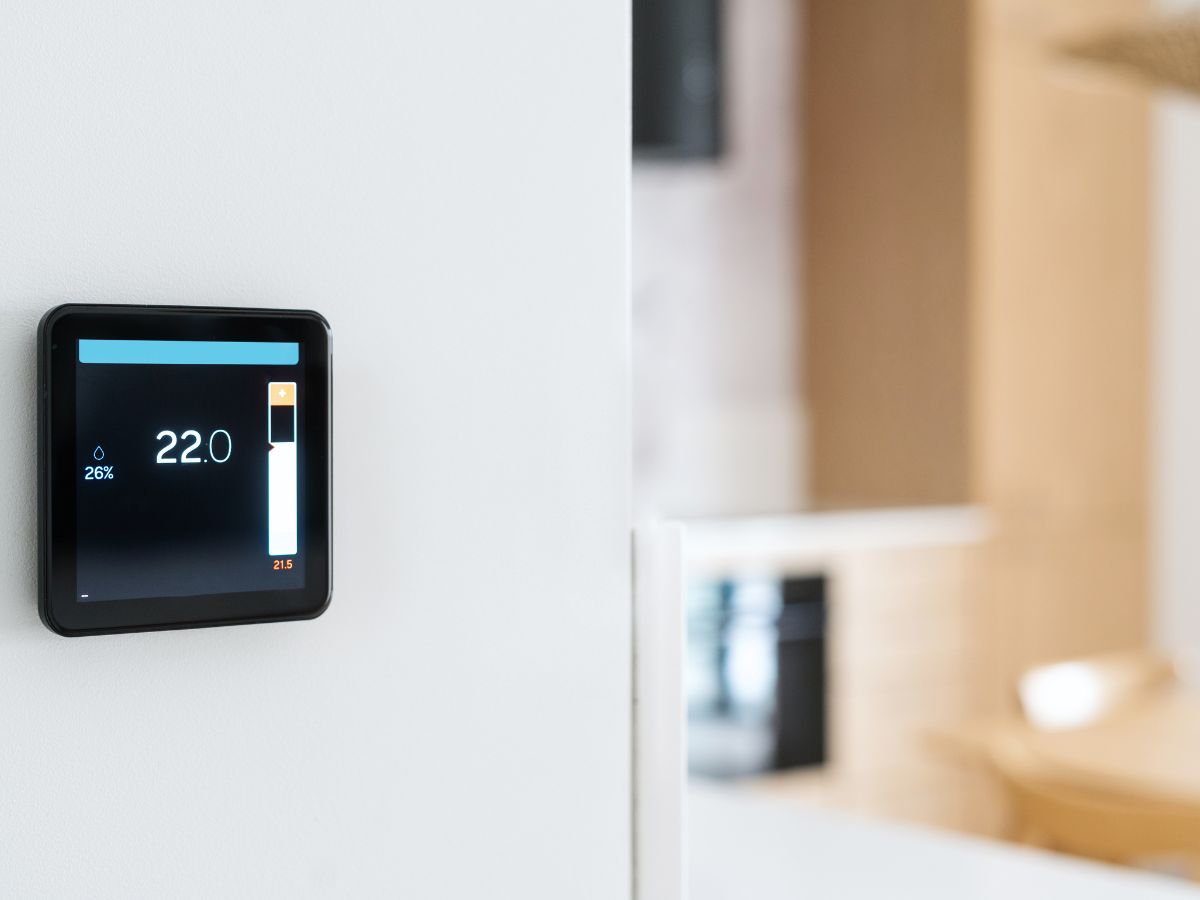
From April 2026, Ofgem’s energy price cap sits at £1,641 a year. A smart thermostat that cuts your heating use by even 10% saves you roughly £164 annually, and it does that year after year without you lifting a finger. Three brands dominate the UK market right now: Hive, Google Nest and Tado. Each one works differently, costs different amounts and suits a different kind of household.
I’m Darryl Hughes, a Gas Safe registered heating engineer based in Ashford, Kent. I install all three regularly and see how they perform once the new-gadget excitement wears off. This guide breaks down what each thermostat does well, where it falls short and which one is likely to save you the most.
The Feature Nobody Reads About
Before we get into brands, there’s one technical detail that affects your savings more than any app feature or voice assistant. It’s called OpenTherm.
Most older thermostats work on a simple relay: they switch the boiler fully on when the temperature drops, then fully off when it hits the target. Your boiler fires at maximum output every time. OpenTherm changes that. It lets the thermostat talk directly to the boiler and ask for exactly the amount of heat needed. Your boiler runs at lower output for longer, staying in its most efficient condensing mode. Danfoss engineering tests confirm that modulating control through OpenTherm uses measurably less energy to hold a room at 20°C compared to on/off relay switching.
Here’s why this is relevant to your choice: Google Nest (4th generation) and Tado both support OpenTherm as standard. Hive now supports it too, but it’s not the default mode and needs specific configuration. If your boiler is OpenTherm-compatible (most modern combi boilers are), a thermostat that speaks that language will outperform one that doesn’t. The app on your phone looks the same either way. The difference shows up on your gas bill.
Three Thermostats, Three Philosophies
Each of these three products takes a distinctly different approach to keeping your home warm.
Hive is backed by British Gas and built on a principle of simplicity. There’s no subscription, no paywall, no features locked behind a monthly fee. The Nano 3 Hub released in January 2025 added Wi-Fi connectivity and Apple HomeKit support, addressing the two biggest complaints users had for years. The thermostat hardware itself hasn’t changed since August 2023. It’s reliable, familiar and easy to use. If you want something you can set up, trust and mostly forget about, Hive does that well.
Google Nest takes a different approach. The 4th generation thermostat learns your routine over the first couple of weeks and adjusts itself. Its Home/Away Assist uses your phone’s location to dial heating down when nobody’s home. It supports OpenTherm, Matter and Thread, giving it the most future-proofed connectivity of the three. One thing worth knowing: Google ended support for 1st and 2nd generation Nest thermostats in October 2025 and stopped selling new models in parts of Europe. The 4th Gen remains fully supported, but it’s worth checking the long-term roadmap before you buy.
Tado, particularly the newer Tado X range, is the most ambitious. It offers room-by-room zonal heating through smart TRVs (around £70 each), so you’re only warming the rooms you’re using. In September 2025, Tado rolled out AI Assist to all Tado X owners, a machine learning feature that studies your household’s arrival patterns and heats each room accordingly. The catch is that geofencing and AI Assist sit behind a subscription: £3.99 a month or £29.99 a year. Whether that’s worth it depends on your home. In a three-bedroom house where two rooms sit empty during the day, the zonal savings will comfortably outstrip £30 a year.
One thing I’ve noticed across heating installations is that the households that benefit most from Tado tend to be those with irregular schedules. Shift workers, families where someone’s always in a different part of the house, homes with a spare room heated for no reason five days a week.
What Will You Save?
Manufacturer savings claims are always optimistic. Independent estimates are lower, but still meaningful:
- Tado X claims up to 22%; independent testing suggests 10 to 22%, saving an estimated £80 to £200 a year
- Google Nest estimates 10 to 15%, backed by independent figures in the same range, returning roughly £75 to £150 a year
- Hive’s savings sit around 8 to 12% independently, translating to approximately £50 to £120 a year
These figures are based on the Ofgem April 2026 price cap and average UK gas consumption. Your saving depends on your home’s insulation, your boiler’s age and how you currently heat your space. The payback period for any of these systems is typically under two years, often under one.
The Thermostat That Fits Your Home, Not Just Your Phone
All three brands will save you money compared to a basic timer. The difference lies in how they get there. Hive keeps things simple and subscription-free. Nest learns and adapts on its own. With Tado, you get precision room by room, if you’re willing to invest in the hardware and the subscription.
Your boiler is already doing most of the work. Shouldn’t the thing controlling it be just as capable?
If you’re unsure which thermostat works with your current setup, or whether your system supports OpenTherm, we can check and advise. Hughes Heating installs all three across Ashford and Kent; get in touch for a straightforward recommendation based on your home.