

Landlord Legal Obligations for Heating in Rental Properties

a canterbury house in the distance through the trees

In 2023, 10% of private rented dwellings in England had at least one HHSRS Category 1 hazard, compared with 8% of owner-occupied homes and 4% of social rented homes (English Housing Survey 2023–24, MHCLG). Landlords in England must keep space-heating and hot-water installations in repair and proper working order, arrange an annual Gas Safe check with a CP12 record for tenants, and ensure the home does not present an excess-cold hazard. These duties sit mainly under the Landlord and Tenant Act 1985 and the Gas Safety Regulations.

If you let property in Ashford or the wider Kent area, those figures are not abstract. They explain why councils, agents, and tenants pay close attention to boilers, radiators, and paperwork. I’m Darryl Hughes, a Gas Safe registered engineer with Hughes Heating. This guide walks through what the law requires today, how temperature and hazard rules really work, who pays when heat fails, how fast you should respond, and how EPC rules sit alongside day-to-day repair duties. It is practical guidance grounded in statute and Official Statistics, not a substitute for formal legal advice on a disputed case.

What must landlords legally provide for heating and hot water?

Heating compliance is a stack of duties that work together. One layer covers repair. Another covers gas safety process. A third sits in housing standards enforcement when a home is too cold or unsafe. Understanding each layer stops you relying on tenancy clauses that cannot override the law.

Section 11 repair duties

Under section 11(1)(c) of the Landlord and Tenant Act 1985, landlords of short residential leases must keep in repair and proper working order the installations in the dwelling for space heating and for heating water. That wording is deliberate. It covers the kit that produces and delivers heat and hot water, not a vague promise that the house will feel cosy.

Section 11(4) goes further. A tenancy term cannot push that repairing obligation onto the tenant. You can ask tenants to use the system sensibly and to report faults. You cannot write your way out of maintaining the boiler, cylinder, pump, or associated controls that form the installation.

For most private tenancies in England and Wales, this is the core civil duty when heat or hot water fails. It is also why a “tenant to maintain boiler” line in an AST rarely helps if a dispute reaches a court or ombudsman-style process.

Gas safety checks and the CP12 record

Separate from section 11, the Gas Safety (Installation and Use) Regulations 1998 require landlords to maintain gas appliances and flues and to arrange safety checks by a Gas Safe registered engineer. The Health and Safety Executive sets out the practical rules landlords use every week.

According to the HSE’s guidance on gas safety check records, you must provide existing tenants with a copy of the gas safety check record within 28 days of the check being completed, and you must provide a copy to prospective tenants before they move in. You must keep records for at least two years.

The same HSE guidance explains a detail many portfolio landlords miss. Under the Gas Safety (Installation and Use) (Amendment) Regulations 2018, you can carry out the check up to two months before the due date and still keep the original anniversary. That stops your compliance date drifting earlier every year. If you use that flexibility, keep evidence until two further checks have been completed so you can show the cycle stayed lawful.

One point of confusion is worth clearing up early. The landlord gas safety record (often still called a CP12) proves the statutory safety check. It is not the same thing as a full boiler service. A service supports reliability, efficiency, and warranties. The safety check is the legal minimum on the gas side. Many landlords book both on one visit, which is sensible, but a service sticker alone does not replace the record tenants are entitled to receive.

If you want the wider compliance picture for gas, EPCs, and related duties, our landlord heating and plumbing compliance guide sits as the hub behind this article.

Treat the legal stack as a calendar, not a crisis. One booked Gas Safe visit, clear record storage, and a simple fault log will prevent more winter stress than any emergency call-out ever will.


What temperature must a rented property reach?

Search results often promise a single magic number. English law does not work that way. There is no Act that says every rental must sit at a fixed indoor temperature at all hours. Councils and surveyors assess risk, especially the HHSRS hazard known as excess cold, under the Housing Act 2004 framework.

The better question for a landlord is practical. Can this heating system deliver healthy indoor temperatures for the people who live here, through a Kent winter, without pushing the home into damp and mould problems? That is closer to how a housing officer thinks than any thermostat slogan.

English Housing Survey 2023–24 data show why the topic stays live. Excess cold was among the most common Category 1 hazards nationally, present in about 2% of dwellings. The rate was around 2% in the private rented sector, 0.3% in social housing, and 3% in owner-occupied stock. Private rented homes also had the lowest share of central heating, at 86%, against about 95% for owner-occupied and local authority dwellings.

Damp tracks the same story. Significant damp was found in 9% of private rented dwellings in 2023, up from 7% in 2019. Cold surfaces, under-heating, and moisture move together. You do not need a failed boiler for a home to become uncomfortable or unhealthy if the system cannot keep up or rooms are left cold for long periods.

Housing and industry guidance sometimes cites design benchmarks around 18°C in bedrooms and 21°C in living rooms in cold outdoor conditions. Those figures are useful orientation. They are not a universal legal thermostat setting you can quote as black-letter law. What you must provide is a system capable of safe, adequate heat, kept in proper working order, in a dwelling that does not present a Category 1 excess-cold risk.

There is a behavioural twist from the energy-price period. EHS analysis for 2022–23 found that large numbers of households cut heating hours, lowered temperatures, or heated fewer rooms in response to cost. Condensation can rise even when the boiler fires. When a tenant reports cold or damp, investigate system performance and how the home is being heated. A usable programmer and thermostat the tenant can operate is part of a working installation in practice.

If radiators stay cold while the boiler runs, the fault may be sludge, imbalance, or component failure rather than a dead appliance. Our guide to power flushing explained covers one common system-performance route when heat distribution is the real problem.
 

Who pays when the boiler breaks down?

Unless the tenant caused deliberate damage, the landlord pays to restore heating and hot water installations to proper working order. That follows directly from section 11. The duty is about the installation, not about who “uses” the heat day to day.
In plain terms, the landlord side usually includes the boiler, flues, primary controls, and the means of getting heat and hot water around the dwelling. The tenant side is ordinary use, basic care such as bleeding a radiator when that is reasonable, and prompt reporting when something fails. Informal notice counts. A text, email, or phone call that puts you on notice of no heat is enough to start the clock on your duty to act.
Issue
Typical responsibility
Basis in practice
Sensible first step
Boiler will not fire; no heat
Landlord
LTA 1985 s.11(1)(c)
Gas Safe engineer attendance
Annual gas safety check overdue
Landlord
GSIUR reg.36; HSE record rules
Book the safety check immediately
Tenant turned the thermostat down
Tenant (use of a working system)
Working installation already provided
Advice, not a repair invoice to the tenant
Radiators cold while boiler runs
Landlord (system performance)
“Proper working order” under s.11
Diagnose sludge, valves, pump, controls
EPC band F or G with no exemption
Landlord (letting standard)
MEES minimum band E to let
Improve the property or confirm a valid exemption
Money arguments get easier when maintenance has been regular. A repair bill in January is often a postponed service bill from the summer. If you manage several homes in Ashford or nearby towns, a shared diary for safety checks and services is cheaper than repeated emergency rates and void risk.
 
When heat fails, who carries the invoice is only half the question. The other half is how fast you move.
 

How quickly should heating problems be fixed?

Reasonable timescales under current law

For private landlords, section 11 requires action within a reasonable time. Reasonable is not a single published number for every fault. It shrinks quickly when there is no heat in cold weather, when occupants are vulnerable, or when excess cold could become a Category 1 hazard.
 
Complete loss of heating or hot water in winter should be treated as urgent. Same-day or next available Gas Safe attendance is the standard most careful landlords aim for. Partial faults, such as one cold room or a noisy pump, still need prompt inspection and a dated plan for works. The paperwork trail matters as much as the spanner work: date reported, acknowledgement, attendance, completion. If a dispute follows, that log is your narrative.
 

What Awaab’s Law signals for the future

Awaab’s Law guidance for social landlords on GOV.UK sets formal hazard response expectations in the social sector. Government materials also point to a 2026 expansion of regulated hazards for social landlords to include excess cold and excess heat where they present a significant risk of harm.
 
Private landlords should read that carefully. Social-sector timeframes are not automatically your current statutory deadlines. Treat GOV.UK as the source of truth for any private rented commencement dates, and do not assume social housing clocks already apply to every AST. What you can do now is adopt a clear internal service level: acknowledge reports quickly, inspect fast, and prioritise total heat loss in cold weather. That approach protects tenants and puts you ahead of reform rather than behind it.
 
Speed without records is still weak compliance. A short email confirming when an engineer will attend costs little and shows you took the report seriously.
 

How do EPC rules shape longer-term heating duties?

Gas safety and section 11 keep people warm and safe this winter. Energy performance rules shape whether the home remains straightforward to let over the next decade.
 
Under current Minimum Energy Efficiency Standard guidance for domestic private rented property, landlords generally cannot let a property with an EPC below band E unless a valid exemption applies. That gate has been in force for new tenancies since 2018 and for existing tenancies since 2020.
 
The wider stock is already moving. English Housing Survey 2023–24 figures show homes in EPC bands A to C rose from 23% in 2013 to 52% in 2023, while bands E to G fell from 26% to 9%. In 2023, band C was the most common private rented band, at 45%. The same survey’s modelled average cost to improve a dwelling to at least band C was about £7,320 across all tenures. That is a national modelled average, not a quote for an Ashford terrace, but it is a useful planning benchmark.
 
Landlords often keep “gas week” and “EPC week” in separate mental folders. Tenants experience one home: safe appliances, adequate heat, and running costs they can live with. Aligning the annual safety visit with a short conversation about controls, servicing, and efficiency turns a legal appointment into light asset management.
 
Policy discussion continues around a higher future private rented floor, commonly communicated toward band C by around 2030. Treat that as a trajectory to watch on GOV.UK, not as a date you should invent in a tenancy pack. The practical move is simple. Keep the current MEES position clean, and avoid investing in the least efficient kit when you replace a boiler or upgrade controls.
 

A practical compliance checklist for Ashford landlords

Compliance reads as a thick statute book. Day to day, it is a short habit list. If you let in Ashford or surrounding Kent, run this once per property and then keep it alive through the year.
 
  • Keep a valid gas safety record in date, issue copies on time, and store records for at least two years (longer if you use the two-month check window).
  • Protect the anniversary date by booking within the lawful early window when access or engineer diaries are tight.
  • Restore heating and hot water promptly after any fault report, with dates written down.
  • Make sure every habitable room has a working heat emitter and that tenants can use the programmer or thermostat.
  • Hold an EPC of band E or above for let properties, or a recorded valid exemption.
  • Keep a one-page log: reported, acknowledged, inspected, completed.
  • Check carbon monoxide alarm provision during safety visits. EHS 2023–24 found CO alarms present in 60% of dwellings in 2023, up from 44% in 2019; improve coverage as good practice and confirm the legal trigger for your appliance types before you rely on a blanket rule.
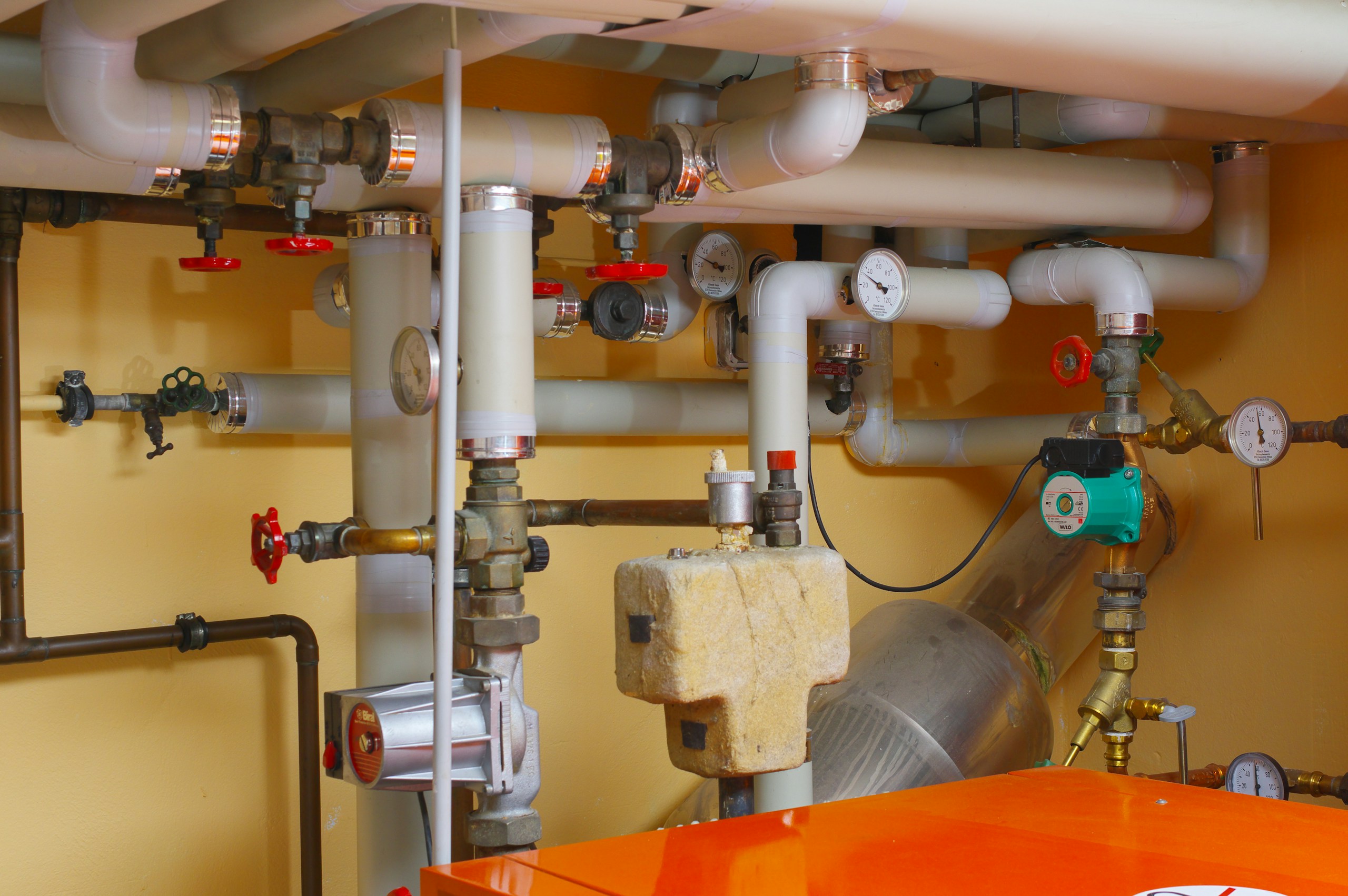
 
Hughes Heating supports local landlords with CP12 gas safety checks, annual servicing, and reactive boiler repair across Ashford and the wider Kent area. The goal is ordinary reliability: warm tenants, clean files, fewer January surprises.
 
When did you last audit your portfolio’s heating paperwork the way a council officer would?
 

Stay ahead of heating compliance

The duties that already bind private landlords are clear enough to run well. Section 11 keeps installations working. The gas safety regime keeps annual checks and tenant copies honest. HHSRS and MEES set the standards floor on cold homes and lettable efficiency. Official Statistics still show the private rented sector carrying higher Category 1 hazard and damp exposure than social housing, which is why process beats panic.
 
The landlords who cope best will not be the ones who memorise every reform headline. They will be the ones who run a single heating calendar: safety check, service, fault response standard, EPC pathway. Social-sector Awaab’s Law and the excess-cold direction of travel show where time-bound hazard response is heading. EPC data show the stock is already concentrating around better bands. Preparing systems and paperwork now is cheaper than scrambling after a commencement order or a winter complaint.
 
If heating fails, fix it fast, write it down and keep the CP12 cycle sacred.
 
To book a landlord gas safety check or boiler service with Hughes Heating in Kent, get in touch and we will help you get the diary and the paperwork in order.
 

Frequently asked questions

What are a landlord’s legal obligations for heating in the UK?

In England, landlords must keep space-heating and water-heating installations in repair and proper working order under section 11 of the Landlord and Tenant Act 1985. They must also arrange annual gas safety checks by a Gas Safe engineer and give tenants the record under the Gas Safety Regulations. Homes should not present an HHSRS excess-cold hazard, and most lets need an EPC of band E or above unless a valid exemption applies. This is general guidance, not case-specific legal advice.
 

What temperature must a rented property be?

No single Act sets one fixed indoor temperature for every rental. Councils assess excess cold risk under the HHSRS. Figures such as about 18°C in bedrooms and 21°C in living rooms are common design benchmarks used for orientation, not a universal legal thermostat rule. Landlords must provide and maintain a system capable of safe, adequate heat so the dwelling does not become an excess-cold hazard.
 

Who pays if the boiler breaks in a rental property?

The landlord usually pays, under section 11 of the Landlord and Tenant Act 1985, unless the tenant caused the damage. That covers repair or replacement needed to restore proper working order for space heating and hot water. Tenants should report faults quickly. Landlords should instruct a Gas Safe registered engineer and keep a written record of report, attendance, and completion dates.
 

How quickly must a landlord fix a broken boiler?

Private landlords must act within a reasonable time. No heat in cold weather, or risk to vulnerable occupants, makes the matter urgent and shortens what counts as reasonable. Awaab’s Law sets formal hazard timeframes in social housing and is expanding toward excess cold there. Private landlords should treat total heat loss as a priority now and check GOV.UK for any future private rented commencement dates rather than assuming social deadlines already apply.
 

Is a gas safety certificate required every year?

Yes. Landlords must arrange a gas safety check at least every 12 months by a Gas Safe registered engineer. Existing tenants must receive a copy of the record within 28 days of the check. New tenants must receive a copy before they move in. Records must be kept for at least two years. Checks carried out in the two months before the due date can preserve the original anniversary if you keep the right evidence.
 

Is an annual boiler service the same as a CP12?

No. The landlord gas safety record (often called a CP12) is the statutory safety check record for gas appliances and flues. A boiler service is maintenance work that supports reliability, efficiency, and manufacturer warranties. Many landlords book both on the same visit for convenience. Completing a service alone does not replace the legal safety check or the duty to give tenants the safety record.

social share

Facebook
Twitter
LinkedIn
WhatsApp